Upcoming Webinars
There are no results found.
Living Gratefully Well: The Healing Power of Gratitude with Dr. Julius Torelli
 Rita Mercer
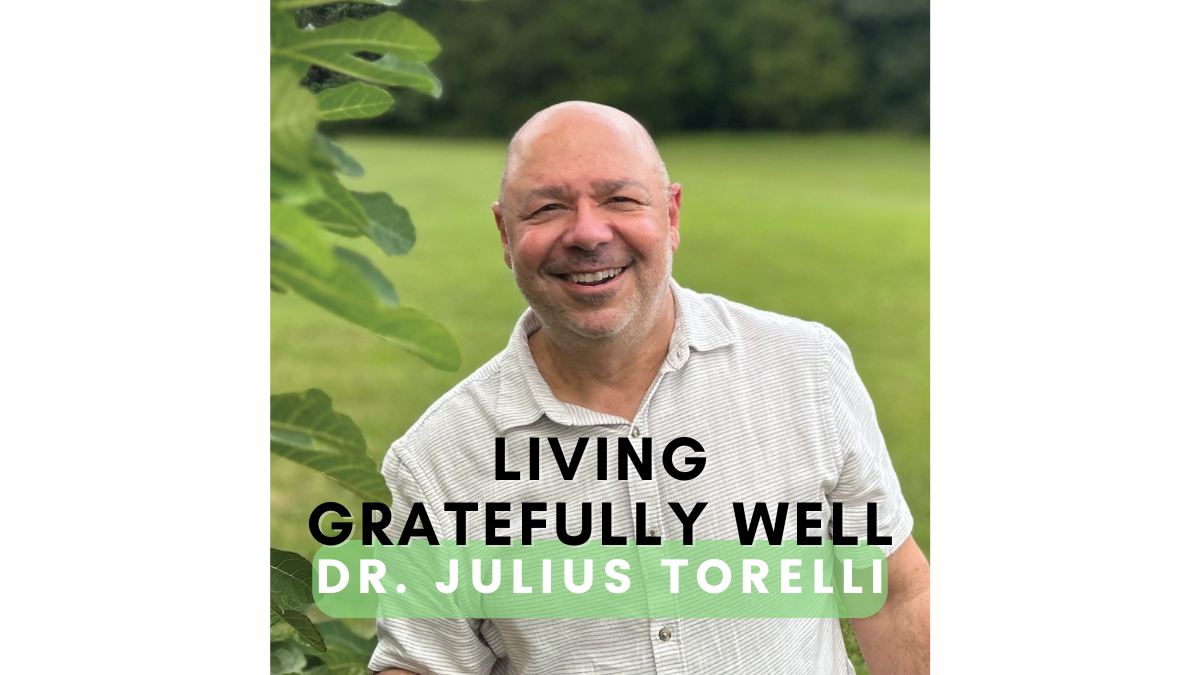
Discover how a habit of gratitude, mindset, and holistic healing can reduce stress, improve health, and help you live gratefully well every day.
In today’s fast-paced world, many of us rush from one responsibility to another, often ignoring the deep connection between our thoughts, emotions, and physical health. Western medicine has achieved incredible technological advancements—life-saving surgeries, powerful pharmaceuticals, and groundbreaking procedures. Yet, one area remains underserved: how emotional and mental health affect the body.
On a recent episode of The Daring Well Podcast, Dr. Torelli, a seasoned cardiologist and founder of the Gratefully Well Model, shared his journey and perspective on holistic healing. His model goes beyond treating symptoms with medications. Instead, it emphasizes the integration of gratitude, intentional mindset shifts, and personal responsibility as central to true wellness.
This post explores his insights, powerful real-life examples, and practical steps you can take to live well—mentally, physically, emotionally, and spiritually.
A Journey Toward Holistic Healing
Dr. Torelli’s path toward creating the Gratefully Well Model began during his final days of medical school. A patient arrived suffering from nausea, vomiting, and dehydration. Despite extensive testing, no physical explanation could be found. As he prepared to discharge her, she revealed her personal crises—her husband had left, her dog had died, and her home had burned down within six weeks.
At that moment, he realized her physical suffering was deeply tied to emotional overwhelm. The diagnosis wasn’t simply “viral gastroenteritis.” It was the manifestation of profound stress.
This experience planted the seed for his lifelong pursuit of understanding how emotions and beliefs affect the body. As he moved through his career in internal medicine and cardiology, he saw the same pattern repeatedly: countless patients presenting with symptoms that had no identifiable physical cause but were instead rooted in stress, grief, or unresolved trauma.
The Limits of Western Medicine
Western medicine is designed to diagnose and treat illnesses using measurable, scientific data. If a patient presents with high cholesterol, blood pressure, or blood sugar, medicine and procedures can be used to lower those levels. The challenge lies in conditions like:
- Chronic headaches
- Fatigue
- Digestive issues such as irritable bowel syndrome
- Muscle pain and fibromyalgia
- Non-cardiac chest pain
For these, Western medicine often provides only temporary relief. Patients walk away with multiple prescriptions—one for pain, one for sleep, one for anxiety, one for depression. But the root cause remains unaddressed.
Dr. Torelli highlights that medicine is not the enemy. Life-saving interventions are essential. However, when physicians rely solely on procedures and pharmaceuticals, patients remain dependent on quick fixes rather than building a foundation for long-term health. This is where holistic wellness bridges the gap.
The Science of Thoughts and Physiology
One of the most compelling parts of the conversation was Dr. Torelli’s explanation of how thoughts directly impact physiology. He recounted a personal experience: one night, he heard a strange noise downstairs. Convinced that someone had broken in, his heart pounded, his blood pressure rose, and his body prepared for fight-or-flight. When he investigated, he discovered the noise came from a broom and boxes that had fallen.
The intruder never existed—yet his body responded as if danger were real.
This illustrates a powerful truth: it’s not the external event, but the thought about the event, that changes your physiology. Our beliefs and perceptions trigger stress hormones, raise blood pressure, and increase heart rate.
Other examples include:
- The Lemon Test: Visualizing cutting and biting into a lemon can make you salivate, even without a lemon present.
- Placebo Effect: Believing you’re receiving effective medicine can improve symptoms, even if the pill is inert.
- Nocebo Effect: Negative expectations can worsen symptoms, even if the treatment is harmless.
These examples confirm that the mind’s role in health is undeniable.
The Role of Stress in Heart Disease
Heart disease remains the leading cause of death in the United States for both men and women over 65. Traditional risk factors—high cholesterol, blood pressure, and diabetes—are well-documented. Yet, the role of stress is equally significant.
Stress contributes to heart disease by keeping the body in a constant state of “fight-or-flight.” Elevated cortisol, increased heart rate, and high blood pressure take a toll over time. The challenge is that stress is subjective. What overwhelms one person may barely affect another. This makes it harder to measure scientifically, which means it often receives less attention in medical research and treatment.
Moving Beyond Quick Fixes: Taking Responsibility for Health
One of the most critical points Dr. Torelli emphasizes is that patients must take responsibility for their own health. In Western culture, it’s common to expect a physician to “fix” problems with a pill or procedure. However, long-term health requires active participation.
For example:
- Type 2 diabetes may require medication, but lifestyle changes like increased activity, mindful eating, and weight management are equally critical.
- Chronic stress can’t be solved by a sedative alone—it requires practices like mindfulness, reframing, or gratitude.
Medicine has its place, but without lifestyle and mindset changes, healing remains incomplete.
Gratitude as a Healing Practice
The cornerstone of the Gratefully Well Model is the practice of gratitude. Dr. Torelli describes gratitude as a free, powerful medicine that improves both physical and emotional health. Research supports that gratitude:
- Improves sleep quality
- Strengthens immune function
- Reduces anxiety and depression
- Increases resilience
- Enhances recovery from illness and medical procedures
- Improves optimism and overall quality of life
If gratitude were a pill, it would be the most valuable drug on the market—yet it costs nothing.
Moving from Quantity to Quality in Gratitude
Many people attempt gratitude journaling by quickly jotting down a few items each night: “I’m grateful for my family, my job, my health.” While helpful, Dr. Torelli emphasizes that quality matters more than quantity.
He illustrates this through his traceback method of gratitude. One night at the grocery store, he became overwhelmed with gratitude when reflecting on the produce and bread available to him. Instead of simply writing “I’m grateful for food,” he thought about the entire process: from planting seeds, to harvesting, to transporting, to baking, to stocking shelves.
This level of reflection creates awe-inspiring gratitude, shifting the body into a state of calm and healing.
Practical Techniques to Cultivate Gratitude
Here are some of the methods Dr. Torelli recommends:
- Gratitude Journaling: Write down three to five things you’re grateful for each day. Focus on depth, not speed.
- Traceback Method: Choose one item (like bread, air conditioning, or your car) and reflect on all the steps and people involved in making it possible.
- Intentional Gratitude in the Moment: When stuck in traffic or facing stress, pause to name one thing you’re thankful for in that situation. This shifts the nervous system from stress (sympathetic) to calm (parasympathetic).
The Connection Between Gratitude and the Nervous System
Gratitude does more than make us feel good—it has measurable physiological effects.
- Sympathetic Nervous System: Activated by stress, leading to elevated heart rate, high blood pressure, and cortisol release.
- Parasympathetic Nervous System: Activated by gratitude and calm, lowering blood pressure, slowing heart rate, and restoring balance.
By intentionally practicing gratitude, individuals can shift their bodies out of chronic stress and into states that support healing and resilience.
Action Steps for Living Gratefully Well
If you want to embrace the Gratefully Well Model, here are practical steps:
- Take Responsibility: Accept that healing isn’t only the physician’s job. Lifestyle and mindset are within your control.
- Adopt Gratitude Practices: Whether journaling, tracing back, or finding gratitude in the moment, build a daily habit.
- Balance Medicine with Mindset: Use necessary treatments, but pair them with intentional practices that support overall wellness.
- Stay Active: Movement doesn’t have to mean marathons. Daily walking, stretching, or light exercise contributes significantly to health.
- Shift Language: Replace “diet” with “nutrition” and “exercise” with “activity.” These words empower rather than restrict.
Final Reflections: Gratitude as a Pathway to Whole-Person Healing
The Gratefully Well Model is not about rejecting Western medicine. Instead, it’s about complementing it with practices that honor the whole person—body, mind, and spirit. By embracing gratitude and recognizing the power of thoughts, we can reduce stress, improve health outcomes, and live fuller, more resilient lives.
As Dr. Torelli reminds us, gratitude doesn’t cost anything, yet it may be the most valuable healing tool available. Living gratefully well is about more than surviving—it’s about thriving in body, mind, and soul.
✨Connect with Dr. Torelli:
- Dr. Torelli’s Website: www.gratefullywell.com
- Book: Holistic Health Pathways (Amazon)
- Substack Newsletter: Gratefully Well
- Free 7-Day Gratitude Challenge
Keywords
holistic wellness, stress and health, gratitude practice, mind-body connection, holistic healing model, heart health and stress, parasympathetic nervous system, gratitude journaling benefits, wellness and gratitude, emotional health and physical health
Get on the waiting list for
Sacred Rest
Mindfulness & Wellness Retreat


Are you looking for more inspiration for wellness tips & coping skills?
Check out The Daring Well Podcast:
Categories: : Gratitude, Healthy, Physical Health

Holistic Wellness & Mindset Coach, Licensed Professional Clinical Counselor
Hi, I'm Rita! I am so excited to support you on your wellness journey! As a Holistic Wellness & Mindset Coach, I offer a holistic approach to support growth through mindset coaching, stress management, mindfulness, coping skills, & mind and body practices. My expertise incorporates nearly a decade in the field of Mental Health & Holistic Wellness and over two decades in Business & Organizational Leadership and Human Resources. The Daring Well coaching model integrates the combined overflow of nearly a decade of certifications/trainings, education, and evidenced-based research to promote wellness in mind, body, and spirit. If you're ready to grow, shift your mindset, find clarity with your life direction and goals, while building a life you love, I am ready to lead the way. Join me on a journey to discover your true self with self-love and unapologetic confidence.
